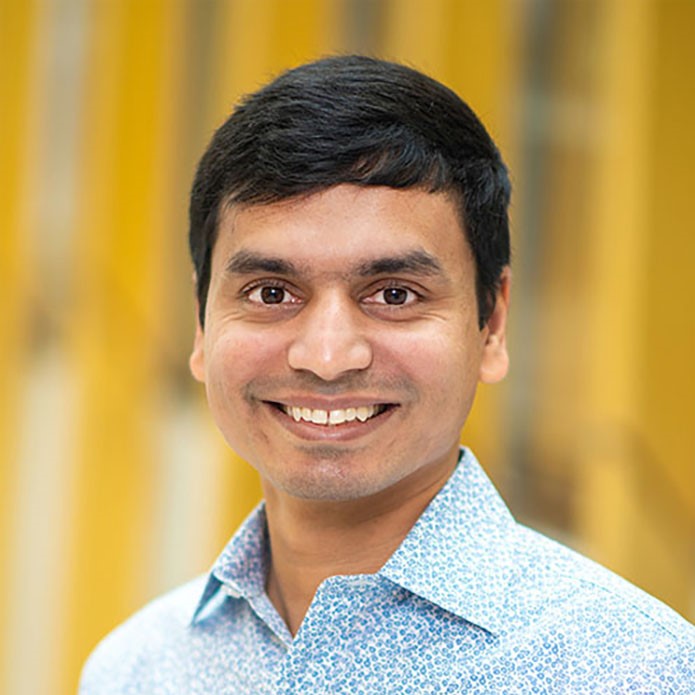
Today we have Professor Sharath Sriram on the show! Sharath is here to talk about his roles as Chief Scientist of Western Australia, Professor at RMIT University, and long-time advocate for improving Australia’s science and research ecosystem.
He shares how he’s built a career along two parallel tracks: leading a research lab developing next-generation medical technologies, while also working at a national and state level to fix the systems that support researchers. From academia to policy, Sharath brings a practical, values-driven approach to leadership that’s focused on action, not titles. If you’re interested in leadership in science, research careers, and how policy really works, this episode is for you.
Here’s what we talk about.
- How engineering thinking shapes his approach to leadership and policy
- The biggest challenges facing early- and mid-career researchers
- How to think strategically about research funding, infrastructure, and scale
- Why commercialisation and publication don’t have to be in conflict
We also get into the importance of values in leadership and staying true to them.
The Lead Candidate tool kit
- His LinkedIn profile here
- His speech at the National Press Club here– there are many other interviews too!
The Lead Candidate
Web: TheLeadCandidate.com Instagram: @theleadcandidate
Episode transcript
Simona Carbone: [00:00:00] I acknowledge that I made this recording on the lands of the Wurundjeri people of the Kulin nation. I pay my respects to their elders past and present. These elders lead by nurturing the physical, spiritual, mental, and emotional wellbeing of the communities they serve.
Welcome to The Lead Candidate, the show where we aim to understand what makes for a great leader in science. I’m your host, Dr. Simona Carbone.
Simona: Before we get into things, I’d like to thank the Monash Institute of Pharmaceutical Sciences for their ongoing support of the lead candidate and for backing thoughtful conversations about leadership in science. Next on the show, we have Professor Sharath Sriram. He’s such a lovely and passionate person, deeply driven by his values. You’ll hear in his profile, he’s got a number of roles that he’s holding at one time, but at the heart of it, he’s an academic with a research lab and he is actively trying to improve the working environment for [00:01:00] other young training academics.
For those not in academia. Keep listening to this episode. Sharath is a strategic thinker and very solutions focused. As former president of Science and Technology Australia and now Chief Scientist for Western Australia, he brings a unique experience across business policy and research. Enjoy.
Today on the lead candidate we have Professor Sharath Sriram. Welcome, Sharath.
Sharath: Hello. Simona. Thank you for having me.
Simona: Okay, so Sharath, you do so many things. So you’re a professor at RMIT where you lead the research group, functional Materials and Microsystems with Professor Madhu Bhaskaran. This is a role you’ve had for a little while now, uh, but on top of this, you have, uh, taken on the role as being chief scientist of wa, which is a huge role to take on.
Um, nevermind. Balancing that with your academic career. And you’ve also held multiple positions on many boards and associations as well, some of which I’m sure you’re still a [00:02:00] part of, but some, I’m guessing that you’ve had to step away from too, in terms of overall science. You’re an electronic materials engineer and your research aims to make breakthroughs in technologies, nano electric sensors, and medical technologies.
So that’s a lot. So that’s a, that’s a big description. So normally I get people to describe what it is that they do or what their role might be for you, that must be very hard. So how do you summarize it for people and what do you lead with when you’re first introducing yourself?
Sharath: The way I explain this research, I’m an electronic engineer trying to make medical devices and usually our team’s vision is to make science fiction reality. While being a researcher, I’ve obviously, like every researcher, seen the challenges, the barriers in the system, and so I’ve used that to inform our way how government policy should be.
And so that’s why I’ve had these two parallel tracks in my career of being a researcher, but at the same time trying to constantly [00:03:00] change the ecosystem.
Simona: I love this. I think this is a really exciting topic, um, for us to cover, trying to understand how academics do it, how they do get into the policy side of things, trying to balance that with their academic role. So there’s some of the topics we’re gonna be covering today.
Um.
Sharath: will say it’d be tough to use the word balance. I don’t think there’s a formula for that.
Simona: No, it’s never balance. It’s one more than the other. Right. And sometimes you get lucky and they’re in between. But yeah, it’s a good thing to point out for sure. Um, but in amongst all this, you’ve got many leadership roles. So the first question I ask everyone on the show is, were you born a leader or have you become one over the course of your career?
Sharath: I think leadership is often never about the title, right? It’s about doing it with action. So me, maybe the engineer me, if I see a problem or a challenge, I need to look for a way to fix it. And I think that’s been my leadership journey. [00:04:00] So when I see something missing in terms of research infrastructure, I like to build a facility.
If I see a poor policy which prevents young people from establishing their careers, I would like to change that. And if I feel the country is missing out on. Massive opportunities. I like to advocate that government actually start investing in it. Uh, so I think my leadership journey is probably leading like an engineer
trying to fix things.
Simona: I love that. That’s a really great answer. I haven’t had someone I don’t think answer that way before, but yeah, that’s a, that’s a really great response. And you’re right, like if you’re, if you are approaching leadership from the right point of view, it should be more about, rather than the leadership role, but more about trying to achieve something.
And in your case, it’s trying to fix things that you see, um, that need to be fixed. So that’s a really great answer. I like it. Um, okay, so. First off, we’ll go through a few points over your career and how it’s developed. Uh, so you did your Bachelor’s of engineering at PSG College of Technology in India, uh, before [00:05:00] moving across.
Now, I can’t tell from your LinkedIn PRO profile if there are some steps in between, but it appears you’ve then moved across to Melbourne, uh, where you’ve joined RMIT, one of the universities here to complete your masters and PhD, uh, where you’ve ended up leading a lab. So I guess the first question to try to understand what having an education might be like in these two different countries.
Um, have you, did you note anything either in your journey or from your other peers as you’re going through the, how there might be differences between the needs and the wants of students in these environments, and how have they informed the kind of leader you’ve been in a research setting?
Sharath: I think you sort of nailed it in your question, like each of those environments are dramatically different. Like when you go through an education process in India, it is heavily driven by the scores you achieve because it’s a dense population, and so academic excellence is what sets you apart. [00:06:00] And there’s often no bandwidth to get into project-based activity, or every extracurricular activity you do is consider a distraction, so dramatically different environment.
While in the Australian education, there’s much more project-based learning, uh, you learn by doing rather than by from a textbook. And so it is quite a big shift. That’s one of the reasons when in Australia or any international system, if you have international students coming in, it does take them time to actually settle into that sort of assessment system, academic system, and learning system. One of the reasons for the move was also driven by probably the engineering aspect. So when I was growing up or doing my undergrad. Everyone in India was getting into information technology, getting into software companies. Uh, the very philosophical me said, the code you write will change in a few years time.
I’d rather build a [00:07:00] computer on which you write code. And so that’s why I became a hardware engineer wanting to make the computers and the electronic chip.
Simona: Very smart. I love that.
Sharath: I argue, now. That Nvidia has caught up in valuation of all the software companies and starting to overtake them.
Simona: Yeah, probably well played on your part. That was good foresight for sure. So just to touch back then on, um, that approach in terms of learning from like a score based system versus a project, uh, based system that the two, two countries very broadly seemed to have. Or the researchers within those two countries seem to have, what are the, if you were to pick a, a positive from each approach that perhaps each system could learn from the other, what do you think they would be?
Sharath: Uh, I think, uh, I’d say like an Indian system or a system which is based more on books. ’cause often there are not enough laboratory resources [00:08:00] does, uh, keep challenging your fundamentals.
So I do and think your physics, mathematics, that sort of basic sciences become much stronger, uh, in a more experiential based learning.
I think we actually miss out on that because actually getting into activity. There’s no, no easy way to do fundamental physics, uh, in an activity based, uh, setting.
Simona: Yeah.
Sharath: And so you get better with your hands there, probably your depth of knowledge is better. So I think that way moving countries, getting exposure to different systems maybe makes you a bit more wholesome in some ways.
Simona: Yeah, you get that all rounded experience. It’s a big question, even just more broadly as we move into, if you think about. Learning, just learning with ai no matter what the topic is, uh, AI is becoming a part of what we’re doing. The way students study and generate essays and things like that no matter what the topic.
Uh, but it does mean that we’re skipping out on some of the fundamental learnings, uh, that you use to progress an [00:09:00] idea from start to finish. So it’s definitely something to think about more broadly as well as we’re moving towards this new stage of education and learning for all of us as we move through work.
Sharath: I’ve been asked that question about AI quite a bit because I engage with the school students, and so that thing is AI gives you access to everything. Then do you actually need schooling and education? I think it’s quite a nuance, right? Because someone framed it as with ai, students have knowledge at their fingertips, so I actually challenge them and again, I became an engineer.
I said they have information at fingertips, so that plus critical thinking is equal to knowledge. So they need to be able to analyze it
Simona: Yeah, that’s very true. It’s not just about being able to do more, but do you know more as a result of doing more so?
Sharath: Exactly.
Simona: Yeah, very key question. Uh, so you’ve had your, if we consider like, the more professional development part of your [00:10:00] upbringing, so moving towards what you’ve ended up doing as a research career.
You’ve had all that training really at RMIT where Masters, PhD, and then gone on to have a research group. Now sometimes it can be, uh. Criticized or critiqued, I should say, having stayed at one university that whole time. Yes. You’ve definitely had your experience somewhere else beforehand, but that real, becoming a professional has all happened at one spot.
Uh, what do you say in response to that critique? Do you have any like, comment to that or can you cite how it’s actually been really useful for you?
Sharath: It’s a valid question. Right, and it, you’ll be interested to know at the stage I finished the my PhD. In the Australian grant system, you actually had to write a justification if you’re not moving institutions when you’re applying for a fellowship, because the perception is you need to do your fellowship elsewhere.
Uh, so the justification I had to write was mine was an experimental PhD, so the sort of infrastructure we need, actually many [00:11:00] Australian institutions didn’t have. So my only choice was then I leave Australia, go to my postdoc elsewhere, and then I may or may not make my way back here. So I did have to write a justification along the lines.
You said, I’ve already moved into a different environment I’ve established and it’s heavily reliant on this sort of technical capabilities, which are not there. Uh, so that is a negative in you that you’re missing out on exposure, but you can scaffold it in different ways. So through my early career researcher phase, I collaborate with a lot of international researchers.
I spent time in their labs. So you understand different operational styles access different equipment, but the biggest pro is you are actually not constantly resetting your career because every move, whatever said and done, you lose between six months to a year. You’re setting up in a new environment, you’re getting your lab up to speed.
And we know research careers are like compound interest. You can’t just take a break [00:12:00] and continue. You lose out much more than that. And so being in that same place gives you that. And quite bluntly with how universities work and their processes in bureaucracy, being in one place and knowing to work the system is much more powerful than learning a new system every few years.
Simona: Absolutely. That’s very true. Uh, there’s, uh, there’s definitely power in that for sure. Um, so I first heard your name because I had, uh, your co group leader, professor Madhu Bhaskaran on the podcast back in 2021, and it’s worth mentioning that she’s also your wife. Probably, I’ll say that primarily first, but for the purpose of science, she’s your co, co-lab, uh, C lab lead.
And at the time, she’d just taken on the role as being, uh, chair one of the co-chairs of women in STEM Australia. And when I asked her why she got into it, uh uh, she said it was because you had really encouraged her to take that role [00:13:00] in advocacy and how important it was. Um, so I was wondering, it’s clearly then for you to not only take it on your.
But to truly encourage others to do it, it’s clearly something that’s very important to you. Uh, so what made you first want to get into the advocacy side of things? What, what was the first role you took on and, and why? Why did you do it?
Sharath: I, I, I’ll maybe start by answering the principle with which I operate for advocacy, and then the first one I took on, uh, I think I operate on two principles. One is, uh, don’t complain, present a solution,
because the first one’s very easy to do. The second one is hard. I.
Simona: Absolutely. So good.
Sharath: Often when you’re presenting a solution or two to three solutions, you’re putting the pressure on the person saying why they can’t take those solutions up.
Because they can ignore your complaint, but it’s harder to ignore a solution. Uh, and the second principle goes back to the fundamental line of democracy. Ask [00:14:00] not what the country can do for you, but what you can do for the country. So being much more proactive, uh, because don’t expect favors. If you’re proactive, you actually get people collecting around you to actually achieve things.
So those are sort of the two things which always drives me in the advocacy space. Um, and as you know very well, a research career is packed. anything we do in the advocacy or uh, external space is voluntary and. It does in some ways take time away from your core activity. You could be publishing more papers or writing more grants.
Uh, but where’s the fun in that you need to go break a few things and fix them. Uh, but the main reason I got into advocacy is again, with that engineering mindset, I was seeing people getting into research careers. We’ve invested in that training so much, and then there’s no support system after that.
Simona: Hmm.
Sharath: Uh, we’d like to turn out PhD students, but then.
Want them to sink or swim on their own. [00:15:00] Uh, it just made no sense to me from both the investment, from of taxpayers money, the talent we train and we potentially lose. And the disadvantage it creates because, um, I’ll say stability in career seems to be at the opposite of how you need to live life, because that’s when you’re trying to actually.
Settle down or buy a house or have a family, and that’s when it’s completely unstable. If you could actually flip carriers around, everyone would be happier.
Simona: Yeah. Yeah. it’s true. Yeah, I, yeah, I’ve, I’ve often described to earlier career researchers that, you know, ’cause I, I’ve remember feeling that struggle. So just for context, for people who are outside Australia, perhaps not. All of our university systems have, uh, tenured positions. Some universities do, some don’t.
Uh, and then others have tenure, but they’re subject to grant funding generally, for the most part, particularly if you’re solely [00:16:00] research and not, uh, teaching. It’s, um, yeah, you’re reliant on, on grant funding or fellowships to fund your position. Um. Yeah, I just remember being so scared, uh, in the first few years of your career, when it’s not established, how am I going to do this?
You can’t see a way forward. Um, obviously, you know, there’s a bit of imposter syndrome that comes in with that as well. But then as you move on, you start to get more and more comfortable in the fact that you’ll be okay, but trying to. Get that message across is really hard to do. And is it then it come, brings up the question which you raise is, well, is that really an okay situation to put people through or not?
Just ’cause it’s okay for some people doesn’t mean it’s okay for everyone.
Sharath: So I think that was the trigger for me to get into the advocacy space, and I think a couple of things came together pretty well. One was the Australian Academy of Science was forming what is called Early and Mid-Career Researcher Forum. [00:17:00] Uh, because though they’ve always been doing advocacy to government and they felt they’re missing the representation of early material researchers, uh, I should give a nod to Professor Bob Williamson, who was on the council and actually created this.
So he convinced the academy that we need, this formed a group of 10 people. Uh, it was more in the medical space. That was what he was familiar with, but fortunately, I got a chance to be one of the 10. We became very active. We started working with funding agencies, challenging their processes and systems because people follow the money, the incentives in the system follows the money.
So if you had to change how the money is given out, you can change behavior and culture. And so the way grants are structured, how much you rely on metrics or older style metrics. Um, and uh, the bigger factor, especially for women is, uh, maternity leave breaks. Uh, usually [00:18:00] if you’ve been in the system long enough, you can get up to six months, but if you’re not, it’s prota and,
Simona: Yeah,
Sharath: and your child doesn’t grow up the moment your maternity leave break ends.
Simona: that’s very true.
Sharath: so we had a good, uh, fortune of working with the Australian Research Council and the then CEO Aidan Byrne. And considering every career break for a child is a two year break. And so that actually changed your eligibility for grants on that basis. So it didn’t matter if your actual maternity leave break was a three month break or a six month break, it was always considered a two year career interruption.
So it extended your early career or mid-career status much further. And so those are small tweaks in the system, but it’s a big signal that people matter. These breaks impact you significantly, but we’re at least doing what we can to support you through it.
Simona: Absolutely, and I’ve personally benefited from that kind of change as well. So incredibly grateful for that kind of advocacy. So, yeah, ECR forum seems to be one of the earlier, or the Academy of Sciences [00:19:00] was, was one of your early entry points into advocacy. Um, from what I can tell from your profile and consistently representation for earlier, mid career researchers is one of the things that you hold as being quite important and quite, um, dear to you.
Sharath: I think because we talk. Out about the leaky pipeline, especially in the context of women, but the early mid-career stages, the essential leaky pipeline of talent, because that’s the hardest bit in your career before you get tenure or some form of stability or group leadership. Uh, I think once people cross that, then it’s that choice of what they want to do, whether they want to stay in research or not.
But that is that very indecisive, unstable part.
Simona: yeah, absolutely. Um. Yeah, it’s, it’s a huge thing. And I’m just thinking about, so at the time of recording this podcast, uh, there’s been early indications in terms of most grant announcements for the year from, uh, two major funding bodies, the Australian Research [00:20:00] Council, which is a broad research, and then the National Health and Medical Research Council, which is more for.
Or as it says, medical research in Australia, um, and success rates were incredibly low. There’s figures out there of being around 8% success rates maybe around like less than 200 grants for the NHMRC were probably funded. Um, so what’s the next thing then? What if, if you were able to change something, having that attitude of.
Trying to fix things and change things. What do you think are the primary things that we need to start advocating for to change? Obviously, more money is a, is an easy thing to ask for, but what, what do you think the big things are?
Sharath: So I think more money often sometimes complicates it because it can hide the problems.
Simona: Mm-hmm.
Sharath: So currently our challenges in the system are, there are a lot of inefficiencies. Uh, for [00:21:00] example, the Australian Research Council spends about a billion dollars, the National Health and Medical Councils, uh, council, more than a billion.
We have the Medical Research Future Fund, which should be dispersing about nine 50 million. So if you put that together, there’s reasonable money. But then there are procedural barriers where we are not spending the MRFF to the extent we should. It’s been an ongoing issue from the time it was formed. And currently our research funding is split across 160 budget lines managed by 14 government portfolios.
Uh, so, and everything then has an administrative burden, an operational cost. So we just sort of leaking money constantly streamlining. That to me is a big opportunity. Uh, very closely related is in my opinion, we have too many grant rounds. Uh, we constantly finding writing grants with this mere success rate, you might as well put consolidated grants, tick all the boxes of the schemes you want it to be considered for, [00:22:00] and create efficiencies that way.
Uh, so let people focus on research rather than be an author all the time. So I think there are, I think, structural things. There are many we things we can fix. Obviously the extra money would be good, but I sometimes I feel you artificially inflate the success rate. You’ll never fix the fundamental issues of the system.
Simona: Yeah, I really like that. That’s a really great, uh, approach. Yes. ’cause the all round writing of grants all, all year round and not, then you’re not actually contributing to your papers, for example. It, you know, something’s gotta give. So I really, I really like that approach. I think that’s great. I think there’ll be a lot of people who’d appreciate that response too.
Um, so. One of your most high profile roles that you had before this one was probably the fact that you were president of Science and Technology Australia, uh, and you held that role from the end of 2023 up until, um, very, very recently. Um, this year you, you stepped away from that role, but it’s part of, you’ve been a part of that group for like nine years from what I can tell roughly.
Right.[00:23:00]
Sharath: Eight, I think
seven or eight. I’m not really sure, but yes.
Simona: Well, you’ve been, we’ve been a part of it for a while, so clearly it’s something that you, you find in incredibly important and valuable to, to be a part of. Um, and it’s such a broad group as well, because it doesn’t just encompass academics, but there are also people from. Industry that are part of various aspects of science and technology Australia, from what I understand.
And it’s really a, a, a great group in terms of getting exposure to, um, to government as well. And so to really be a part of policymaking. Um, so through this role when you were president, you gave a brilliant speech, um, to the National Press Club Forum, um, which for international audience. Is a, a forum that allows leaders from all different sectors, uh, to help contribute to public debate and discussion around topics that are important to Australia.
Um, and so on that you spoke as a part of a yearly, uh. Event that happens called Science Meets Parliament. Um, and there are many reasons why I like this [00:24:00] speech, but one thing that was very clear right at the start was you cited so many wonderful, real examples of where science and technology have become things in Australia and you can hear.
Your passion for the things that we have, uh, have done and have achieved. So it got me thinking about the kind of scientists that you started off being from, you know, very early stage of your career to now. Have you always just loved that discovery part of science? Is that something you’ve always just collected or is that something that you found was more and more important to appreciate as you were moving into these larger advocacy roles?
Sharath: I think it’s something most of us as researchers go through every few years, right? That you wake up one day and wonder why am I doing this?
Simona: Yeah.
Sharath: So I think constantly reflecting on the values of why you got into it, I think matters. Uh, like when I started doing a PhD research program, [00:25:00] it was to use electronics.
But to save people’s lives. Uh, as you finish that, you get into the grind of grants and winning fellowships, you actually get distracted because you’re just caught up in writing for schemes which might fund you, that takes you further away from why you got into it. And so I think for me, that constant reset of values is the opportunity.
And I think that was partly what came through in that speech. Like all these discoveries were driven by people. Pursuing a particular value. They wanted to make a difference to society, got it all the way there. But then the system didn’t support them to actually make it real. They needed a lot of luck, which shouldn’t be the case.
We, we should be actually enabling them to deliver to society because our research in some form, or the others funded by society. So it’s a privilege to do research, but we really want to convert it into outcomes for the people.
Simona: Yeah, you, that’s one of your other [00:26:00] platform things that seems to be in terms of, of what you want to advocate for is helping. We’re very good at coming up with the invention or the drug discovery, so like the biology pathways that are. But we’re not so good at Australia about converting it into a innovation and making it become a product.
Um, so not only do you advocate for that, but you are also very much an entrepreneur in this space yourself and trying to make those things happen. So maybe can you cite how that has worked for your academic career, because sometimes that, that. Well, it hasn’t been something that we’ve been very good at in academia, but it can impact the, dare we say, standard metrics of, uh, what academics need to do.
Um, so how have you used that to help keep your career moving forward and in turn help your students who might be impacted by the fact that you can’t publish something, for example, because it’s protected by IP or, or things like that? It’s a big question.
Sharath: It, it [00:27:00] is. Uh, and I think often you solve these challenges by doing it, it failing, it, breaking and finding how you fix it. Uh, so I, I don’t think there’s a recipe to commercialization, right. But you learn incrementally every time you do it. For example, when I, my early stage of research, I was a typical researcher.
I used to publish my papers. We know it’s read by a very select group of researchers in our community. They may even just not read beyond the abstract. Uh, so it made you really think, okay, what’s the point? And so we used to start actually working with media to communicate it as the next step. So getting our research out there, people who funded it should know what’s happening.
You need to excite them. You need to inspire young people who read it, say, oh, I would like to be doing that in the future. So I looked at it in that lens and then we started, uh, publishing or publicizing our discoveries. Uh, there is a challenge there. It was a period when people felt if you are [00:28:00] doing science communication, you had dumbing down the science.
So you had to actually challenge that narrative saying you actually making more accessible. You had to throw open our doors to actually ask people to question us more. So we learned to communicate in a simpler way. So there was that piece. The second one, which was more shocking was we found companies reaching out to us. All major companies, their business development teams are constantly scanning what’s coming up. And that was a big wake up call because some companies, first question was, have you patented this work that stage? We didn’t know what it was. When we say no, the conversation stops in and there because that means the work’s public.
There’s no way for them to harness it. Drive a partnership forward. So from that, we learned we need to patent. And that’s why I said you sometimes learn by making mistakes, but actually learning from those mistakes. Uh, at a recent event, actually, I was saying that if we weren’t, and that’s the scientific process, we need to explain to the public.
Uh, in science it’s all about mistakes. Failure is the only guarantee. [00:29:00] But every time you document your mistake, you learn from it. And improve is when you get an outcome. And that’s why we have a light bulb. discovery had 200 and something filaments, which didn’t work, and then that final material worked. So I think that learning process is key. So then we started patenting our work, and then there’s a piece of working within the university system to make them understand which ones you need to patent, uh, then how you work with the industry to actually get it out to them faster. So a lot of these things you feel you are the system’s not ready or doesn’t know.
And so you have to fight and set the standards and so you do, and uh, and working, I think in the commercialization space or with industries like a relationship, uh, you have to understand what the other party wants. You have to explain to them what your lever are. And I think that’s what sometimes, uh, researchers don’t understand.
Uh, they imagine industries a piggy bank with endless pockets
[00:30:00] and they should fund all their pet things, but no.
They are responsible to their investors and their shareholders. and so you have to tell them why. Sometimes you need to be able to publish while they need to protect it, but they’re not mutually exclusive.
There are actually ways to do it, so we always do it. We write the manuscript as a researcher would, uh, good patent attorney can convert a scientific manuscript into patent claims within three to six hours. They’re so good at it because we do the same arguments which a patent has in our manuscripts.
Simona: Yep.
Sharath: So then as they find the patent, we submit a manuscript.
So it doesn’t stop it, but you have to explain to industry that it’s possible both ways. Now your idea is protected, and then we can have it out there. They have peer reviewed evidence for their patent now, and so it’s actually a win-win. And so I think building that relationship, explaining the win-wins and explaining the trade offs of we have to give and take a bit, I think is how we get into the commercialization space.
Simona: Yeah, I love that. And there’s, [00:31:00] yeah, so if anyone wants to learn how to do it, just go back and listen to that last little snip. It again. And, um, yeah, listen to that carefully. Making sure that you can balance IP with publication is doable. So that’s really good advice. Okay, so two topics that I wanted to delve into, uh, specifically talking about with you.
The first is to really go back of that being a representative of science, um, in. Political space. So we mentioned science, technology, Australia. Um, and just to give context of how big it is, it’s that 235,000 scientists and technologists from the last lot of data that I could see. Um, so that’s a, a huge peak body.
Uh, but then also chief scientists of Western Australia, so, uh, you know, a, a large state, um, within Australia. So, and again, another big role within that, you’ve got. People from all different kinds of science, um, with different drivers of science, not necessarily directly in line with what you are doing, [00:32:00] um, but I guess the fact you’re quite lucky, I guess, in that you’ve got an engineering background, but you also have an appreciation of biology side of things with what you’ve done as well.
So that’s probably well, well played on your part. Um, can you just give us an idea particularly, alright. We’ll start with the, um, chief scientist of WA perspective. What kind of level of scientific understanding do you need to have across this broad range of topics? How does that work?
Sharath: See, I think a chief scientist’s role is mainly, I’d say a strategy advice at the government. You are challenging them to look beyond the horizon and invest in those things so that you’re actually creating security for your state or your country, uh, because it’s very tough to always catch up. So in some areas, you need to pick where you are strong and be the leader, and I think that’s the strategic.
Uh, insight you can give as a chief scientist, rather than [00:33:00] sprinkling small bits on every field to keep everyone happy, sometimes you have to displease some people. But say for the next five years, we’ll actually do these three things. Well be the world leader or one of the top three in the world, then we’ll invest in the next three.
And so I think sometimes that consolidation effort is where you can be strategic, but closely related to when you talk about disciplines, scientific practice. The challenges in growing scale in a topic or even commercializing, it actually doesn’t vary too much. So I think the principles of it are common.
And so sometimes sharing those principles across discipline and enabling is the a key. So for me, it’s been a great experience. It’s been five to six months. I’ve visited multiple labs, multiple companies, trying to understand their technologies in depth, what their barriers to scaling up are. What are the gaps for the early, mid-career researchers in that ecosystem? What bits are not connected, [00:34:00] not talking to each other, which is very common. Uh, so one of the other big roles is actually being the connector. Uh, so I walk out of every meeting, do three, four email introductions of people who should be knowing each other and talking to each other because often that one plus one is three effect actually happens.
And I think those are the key ones, but. Is it really trying to get people to look at it as a sense of scale? Uh, when you refer to international benchmarks, usually those precincts or areas have become big because everyone’s collected around that nucleus in some ways. And so how do you create that effect?
And so those are the strategic things you look at.
Simona: I love this. There’s lots to unpack on what you just said, so just trying to, when, when we talk about strategy, sometimes people don’t quite, like, sometimes it can be used as a bit of a, not a buzzword, but just as a very broad term and people don’t understand really [00:35:00] what that means. Um, so what I’m hearing from you is that you will get like a broad look at a whole bunch of different, we’ll say problems or systems, and then you’ll have to choose which ones you feel are worth.
Investing time in, I guess, like, do you, you have to triage it down to a, to a few problems that you can then come up with a plan to help with that problem. Is that, is that summarizing what it looks like?
Sharath: Uh, to an extent, uh, but I, I look at it more broadly. Uh, what are the key things for a good science ecosystem? People.
Simona: Yep.
Sharath: So how do you actually get talent coming through? What are the gaps in the school education system? What are the gaps in support for PhD students in career researchers? So you’re constantly having talent coming through, but then you also don’t abandon them.
You keep them retained and growing. So the people piece is critical. Then the second bit is to do any form of research. You need good infrastructure, [00:36:00] and so what is the critical infrastructure? How do you actually get it at scale? Because what happens often is everyone likes their own shiny piece of kit.
And so you’ll have eight copies of it across the state. All of them used half day a week,
Simona: Yeah,
Sharath: and you actually get a sense of scale of putting them together. So you can always buy the best and actually have more capabilities at your disposal than just eight copies of the same thing.
Simona: totally.
Sharath: and so driving that sort of thought process and then.
With the equipment and people, you do projects or make products. So that’s your fundamental research or your translation research. And so then there is where you’d have to start being selective. Initially, we are good at this, we need to become even better at it and invested that to get to the forefront or some of this, we’ve created a lot of intellectual property.
How do you actually make them into products? So I think that’s where the triaging comes, , look at which ones you’re really good at, put a bit more accelerant and fuel in it to go faster.
Simona: [00:37:00] I love that. Um, just for context, we should probably explain as well in terms of for, again, international audience who might not appreciate wa situation. So in terms of just geography, it is, uh, the furthest isolated, uh, region of Australia. Uh, in terms of how far it is away from, um, the other major capital cities in Australia, it’s the, the furthest point away.
Uh, and that can mean time zones as well. It’s isolated in terms of time zones, so trying to get meetings and things and collaborating with the Eastern states, for example, that can be a bit tricky, um, in that regard too. Um, and then it does mean that. A lot of the talent moves for a period of time as well.
So it, um, that’s another big problem of w for wa. I wonder how many of the, uh, problems without necessarily referencing anything in particular, but is there a lot of crossover between the problems that you’re trying to solve specifically for science and wa [00:38:00] versus the problems that we are seeing on the East coast, for example, or around Australia where you’ve had a bit of experience through your other roles as well?
Sharath: So maybe it’s engineer me. Every problem can be into an opportunity.
Simona: Love it. Good.
Sharath: Uh, so the first thing you said about the isolation, right? I think it’s one of the most isolated capital cities in the world. So not just in the context of Australia, but the flip side is it’s in the same time zone as two third of the world’s population
Simona: That’s very true.
Sharath: of it.
Simona: Yeah.
Sharath: So how do you actually work globally, I think is the big opportunity. And how do you look at research, collaborations, translation, collaborations? In that context. And so that’s one of the big focus areas I have, uh, looking really broad and how do we compliment all our partners in the Southeast Asian region in Africa and Middle East.
So that’s there. Your second bit. A lot [00:39:00] of the structural problems for research support, I think, are common across Australia. Um, it is a reflection of federal funding. See the federated structure in Australia technically means states are meant to provide services. They are meant to provide education, health, roads, water, electricity.
They’re not actually designed to fund innovation and research. That funding sits at the federal level. Because of those gaps, states are having to step in and keep accelerating, but you can actually create a microcosm by showing the best practice and hopefully. Get it reflected at other states, work as states to influence federal practice and essentially raise the game.
Uh, so you can try and do a top down and a bottom up approach. And so that’s what I’m doing. I keep working federally, but also showing a pilot in some ways, if you will.
Simona: I love that. I just realized as you are answering that question that I did, the [00:40:00] very classic thing that Australian researchers do, which we think about things from a, a national problem of solving rather than going global, thinking global, um, which is
Sharath: I joke with people in wa, don’t look east,
Simona: You look
up. Look up. So good. I think that’s brilliant.
Yeah. It’s something we get stuck into and I just fell straight for it, didn’t I? And asked that question. So, good answer. Uh, clearly you’re doing your role very well. Um, you, you mentioned before, so when we were talking just before the chat, you were saying that you’d just come over from WA and that you’re spending about half the week over in WA Is that every week you spend half the week over there?
Sharath: Yeah, typically, most weeks I go. About, uh, three days a week there.
Simona: Yep.
Sharath: Uh, I’d say three outta four weeks in a month. Uh, but one of the things I’m consciously trying to do is ensure there’s more WA engagement in the East Coast. So in Canberra with other chief scientists because I also [00:41:00] want to work across all the states such that we really collaborate and complement rather than compete.
Uh, ’cause each of the states is really good at something and instead of investing in any duplicate effort. How can we actually make our investments go further? So that’s actually a big part of my focus.
Simona: Yeah. I love that. Um, obviously just thinking of it in terms of your time, just your physical time as well, that’s obviously a quite, this is quite an extreme example of an academic and you’re not exactly giving your time in this role as well. This is a, a position that you have. Um, but we are asked to do so much already, um, and you are trying to balance quite a bit with this role as well.
So how do you. How, how, what, what are the selling points? I guess when advocating for other scientists? Because we need more, we need more academics to get into this kind of space because the real people who understand certainly the academic environment and where it could potentially go are really the people who are doing the work themselves.[00:42:00]
So what’s the big. What’s the big selling point if you’re pitching to, to other academics to get involved and do this? Um, what, why should they, and what is it that they bring that is unique, um, and that is so needed?
Sharath: I think there’s two parts to the answer. See one, the chief scientist wrote us part-time. I like that aspect of it because I stay as an active researcher working with industry so that any policy development I do is relevant. ’cause I’m still applying for grants. I’m training PhD students and ECRs. So you, at least you ensure your policy development is relevant.
It’s not things which is probably in the past or not relevant to the today’s schemes. So I think that mix to me is good. And also not being a researcher in the same state, it’s not typical. I’ll get to that, but it’s good because I don’t have any conflicts of interest. So I’m able to work with everyone, look at every project.
Be on every [00:43:00] committee and get in depth into it. So I think that’s given me a flexibility. But the third aspect with that split role is it in most people’s lives. There are more than just you. So obviously it’s a two body problem. And as you referred to it, my wife is a successful professor and researcher, so we can’t just transplant that easily though it would be nice ’cause it would make my life easier and I can spend even more time in the state, but I do justice to my role and I’m confident I’m doing that.
So I think that’s the bit second part of why would researchers do it, I guess it falls into a few categories. Uh, I’m always a believer in the standard you walk past is the standard you accept.
Simona: Love
that.
Sharath: If the system is not working, you are doing disservice by feeding that poor system. You need to be challenging it, you need to be creating visibility of why it’s not working.
Uh, policy makers need to [00:44:00] know it’s not a good system. Uh, the money should be better spent or there’s not enough money and there’s not. A sustainable model, so constantly speaking up is important. Um, the closely related one is going back to the values of why you’ve got into your profession. Um, and so sometimes the advocacy role enables you to do things, but you also enabling potentially hundreds or thousands of people to follow their values.
Um, if the system is better, they’re able to stay in it. And the last bit is, um. You know, sometimes when you sit on a panel, uh, they may ask you, what would you have told your younger self? We can’t turn back time, but we can at least fix issues for people who come after us. And so I think always doing policy in that angle of how can improve the system for those who come after me is important, I think, and that’s what researchers have to be careful about.
Some people think getting into policy [00:45:00] spaces to influence things, to get their own wins, to get their own pet topics funded. Uh, I’ll be quite blunt then. You’re not an advocate, you’re a lobbyist.
Simona: Yeah, that’s,
Sharath: so I think you have to have the distinction clear in your head about why you’re doing it.
Simona: Yeah. That’s so good. Um, and I think, yeah, that’s a wonderful reason to get into this space as well. And so, and so incredibly needed and absolutely the standard you’ve walked behind is the standard that you accept. So yeah, it’s a great reason to get involved, um, in terms then of how you manage leading these different teams.
So, um. Yeah, I did wonder what it’s like leading, being a chief scientist for WA when that’s not the state where you’ve worked in or are from, or have any real tangible connection to. Um, what, what are the needs of that, that team that you’re working with, um, versus the team in your research lab? Um, yeah.
How they different? Can you cite similarities?
Sharath: I think dramatically different. [00:46:00] Uh, so the, I do the research lab first because it’s easier. That’s a standard environment, and I think that’s a important aspect about the leadership thing because we are on a leadership podcast. If you’re really being a leader, you’re empowering those in your team to actually take up leadership.
Uh, and I always challenge people saying that’s the distinction between leadership and management, uh, whether you’re controlling or you’re giving freedom. Uh, so our team is pretty large, has about 40 people, but a lot of them are senior postdocs who run units by themselves. Obviously, things will go wrong, but what you learn from a trial and. Look at it as an issue, I think is important. And so you, they’re constantly empowered to keep pushing the boundaries and developing their independence. And so I think it gets to a point where the team also runs itself, but you are constantly doing the strategic lens, uh, working with the industry leaders and ensuring the team is [00:47:00] supported.
Because especially when you work with industry, there’s also external culture factors on your team. There’s somebody there to insulate them from that. Um, because you don’t. Some might be beautiful cultures, some might not be. Um, but you have to ensure your team’s culture is protected. So I think you end up starting doing more of those than the actual lab work because you have a good team to do it.
With the WA one, as a chief scientist, it’s a bit different because it’s an independent role. So I have a small team within the department. It supports my activities, but it’s mainly around policy development. Uh, but others, a lot of it is in some ways an individual role. Meeting researchers, uh, meeting policy makers, trying to influence their thinking and pushing researchers to be thought leaders.
So usually people will say, oh, the government should be doing this for me. Raise the standard of your thinking. Why should it just be the state government? Can it be industry? Can it be philanthropists, can be federal? How [00:48:00] do you leverage this more? Stand in the shoes of the minister and the treasurer of how would you justify to a taxpayer of why they’re giving money to you.
Simona: Yeah.
Sharath: So start refining your message and thinking not about your pet project. And so a lot of that is also that training to raise how the research community thinks and asks for things.
Simona: I love that it really starts to like, get me thinking about, and it’s not if, if the government, you just can’t, you’ve removed the fact that it’s the government that’s giving money as well. They’re an investor. So how would you pitch to an investor why your research is worth investing in? Uh, and if you’re really wanting to invest in the sector itself, then you’ve gotta think bigger than just the research that you’re doing, which is what I hear you saying.
Um, yeah, so I think that’s a really great message and really highlights nicely the differences between the two as well. Um, in terms of how you are handling. Juggling all the different [00:49:00] roles. I wonder, do you have, uh, some, a few like really simple things that you do to help you switch, but between positions and, and, uh, we’ll say manage, we may say manage.
We won’t, we won’t use the
Sharath: You don’t say
balance.
Simona: Yeah, we won’t, say balance but manage, um, the different roles.
Sharath: Uh, I don’t think there’s a simple answer. I think it’s down to personalities. See, sometimes I do joke. I do two part-time jobs. It feels like it’s two full-time jobs. ’cause in academia or if you’re passionate about policy and advocacy, none of them you can do in half measure.
Simona: Yeah.
Sharath: You’re going to commit to every opportunity you can and do it.
Uh, so yes, I be in Perth three days a week, but the other days I still take meetings. I engage with people because that’s when the timing works out because the days you’re in person get filled up. Uh, but the same thing with the research. While I’m traveling there, I’ll still be answering my team members.
When needed, not gonna leave them [00:50:00] hanging. It does blur things, but it goes back to the values of you take it on because you really want to make a difference. Uh, don’t take it on for the title.
Simona: absolutely. Um, I can imagine you get asked this question because I, I, a similar position to you juggling two roles and at some point. Can you see a situation where you have to choose between either role you’ve cited, why having both is so important in terms of, uh, well, not just that it’s your passion, but it also keeps you relevant as well in terms of the needs of research to.
Can you see a situation where you will have to choose between the two? And without saying which one you might choose it. Do you feel like you’ve got a preference as to which way it will go?
Sharath: So I think one, all the state chief scientists across all states are part-time, so it’s not by my choice. That’s how the role is [00:51:00] offered, and I felt it actually works well. Because you constantly have that people leadership ability, you’re building because in this role you actually don’t have that. Um, yes, you have to get everyone along on a journey, but you still don’t have that team you’re building.
So I think that’s one aspect to me, a role. Probably. There’s a finite time where you can achieve things, and so that’s one of the things that picking between them, it’s pretty hard. Uh, like if I feel I’ve achieved what I can within my capacity and thinking in four, five years in this role, I probably run its course.
Uh, you shouldn’t drag it out. I’ll just take it back to Science and Technology Australia, you mentioned that. Right? So it was created 40 years back, so this year was its 40th birthday. The reason it was created was the federal government of Australia at that point was gonna stop research funding. They felt we [00:52:00] don’t need to invest in research.
We can buy in things. So all the scientific societies came together and formed a peak body, advocated the government, and we managed to keep it sustained. And then 15 years after that, they created Science meets Parliament. So they’re engaging with policy makers, you’re educating them, exciting them, , want them to really give money to science.
You don’t go ask for it, but you want them, want to make them give it. But then we did strategic planning for STA couple of years back, and my principle for any not-for-profit is your strategic planning is how do you actually design yourself out of existence?
Simona: Yep,
Sharath: ’cause then you solve the problem. So you don’t design to exist, but you have to design yourself out of existence.
So my thinking about roles is very different. So that’s why I’m not able to give you an answer, uh,
because there’s no finite answer to it.
Simona: Yeah. But I love that though. You’re exactly right. You want the, yeah, you, you want these roles to not need it to exist. Um, [00:53:00] it means you’re doing things well. You are not needing to advocate for early career researchers or for researchers to be able to have long-term strategy planning.
Sharath: It’s not an issue anymore. It’s actually solved, so
Simona: Yeah.
Sharath: wouldn’t it be nice?
Simona: Well, I, I hope, uh, you work yourself out of employment. Is that something to hope for? But then I guess it means you that you’ll have problems in engineering that you need to go back to solving. So
Sharath: Find something else. There’s always things to improve. Nothing’s perfect.
Simona: true. That’s true. Um, so the last question that I ask everyone is, if you were to describe your leadership superpower, what do you think it is?
Sharath: I don’t think I have a superpower. Uh,
Simona: Really?
Sharath: yeah, I think it has to just be values focused.
Simona: Hmm. Yeah, that’s definitely a word you’ve brought up several times. So, just to really clar, clarify for the audience, what are your central values? Um, what are the things that you hold dear for yourself?
Sharath: I’ll say, you should be doing it for the right [00:54:00] reason, which often in research or policy is to make a difference, a positive difference. Uh, the second one is you need to be true to yourself and the people around you. Uh, you say something, stick to it. Don’t change it because someone you’re talking to may disagree.
Simona: Yep.
Sharath: Uh, because I think that’s where we actually don’t achieve things because someone disagrees. It’s an opportunity for debate. You explain, take them along on the journey. And so to me that bit is important. And I’ll say the third one is. Try your best. It, some of some things won’t work out. That’s okay. Uh, but at least you can say, I gave it a shot.
Simona: Yep. If you give it a go, there’s nothing much more you can do. Right. I love that. Uh, Sharath. Thank you so much for joining us on the Lead Candidate. It’s been a great conversation.
Sharath: Thank you for having me, Simona.
Simona Carbone: And that’s it for the latest episode of the Lead Candidate. Please like, subscribe and [00:55:00] review our podcast on your favorite podcast platform. I’m Dr. Simona Carbone, and we’ll see you next time on the Lead Candidate.


