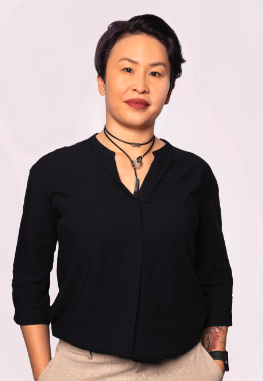
Today we have A/Prof Rebecca Lim on the show! Rebecca is here to talk about her roles as Director of Project and Alliance Leadership with CTMC, and research group leader at the Hudson Institute of Medical Research.
She’s sharing how she balances the leadership requirements of these different roles. If you want to understand the requirements of leadership positions in academia versus industry then this episode is for you.
Here’s what we talk about.
- Leading a team when you are off-site
- When to step up and lead
- How to adjust to changes in leadership roles
- The value of listening and being trustworthy
- Establishing the rules of engagement for your team
We also get into training people in academia to be prepared for roles in industry.
The Lead Candidate tool kit
- Hudson Institute profile here.
- LinkedIn profile here
- Books mentioned in the interview ‘Be So Good They Can’t Ignore You‘ and ‘Drive’
The Lead Candidate
Web: TheLeadCandidate.com Twitter: @LeadCandidate Instagram: @theleadcandidate
Interview transcript
Simona:
Welcome back to the Lead candidate on this next episode, I’m speaking with associate professor Rebecca Lim. Rebecca has a really interesting profile. A few years ago, she moved from a role in academia to one in the biotech world and she’s progressing her career in industry ever since. She still maintains her presence in academia and still has a research lab that she runs at the Hudson Institute. So on this episode, I wanted to get an understanding of firstly, how she manages to maintain a presence and a leadership role in the academic setting when she’s not physically there, but also to get an idea on how she’s managing the change in leadership roles and leadership styles as she settles into her career in industry. Enjoy our chat.
my next guest on the lead candidate is associate professor, Rebecca Lim, [00:01:00] Rebecca, welcome to the lead candidate.
Rebecca: Thank you for
having me.
Simona: Thank you for being here. Okay. So Rebecca has a couple of roles that she is juggling at the same time. First off, she’s director of project and Alliance leadership with CTMC, Based in Texas. And she’s also a research group leader for, a group that’s based in the Hudson Institute of Medical Research, in, Melbourne, Australia. So she’s doing both those roles at the same time. Rebecca, juggling roles between, industry and academia is something you’ve done for a number of years.
before you were at CTMC, you were based in a, biotech company, based in Melbourne as well. so I thought. For you trying to get you to, generally I’ll ask people to do a pitch about, you know, what, what their science is, what their role is, but I can imagine that would take quite a while. So I thought I’d ask you when you’re at a dinner party, what do you say it is that you do?
I tell people I’m a [00:02:00] scientist.
Rebecca: yeah, still a scientist.
Simona: Okay. And so then if they start digging in a bit deeper, like what kind of science, what’s your general area of expertise and, why is it that you are in both academia and industry?
Rebecca: think it depends on the type of dinner party, right? Um, so if it was. For example, if it was, um, dinner party with mom and her friends, I’ll tell her, well, we do research to help patients who have exhausted conventional treatment. So when their doctors can’t find anything else that will help them.
I work with companies and my academic research is in that area where we’re looking to find new solutions for patients who are at the end of the rope. That gives me a bit of a get out clause because my academic research is so different from my, Industry research or the industry work that I do in biotech in [00:03:00] both my formal role at Prescient Therapeutics in Melbourne and my current one at CTMC.
It’s been around oncology, cell based therapies for oncology. But with my academic research, it was cell based therapies and cell therapy. derived therapies for a breadth of different clinical indications, but across the board, there were medical needs and it was essentially early phase, discovery research and early clinical phase testing.
Simona: Beautiful. So cell based therapy really is the common link between Everything that you’ve done, just different sides of that researching how to use them and then actually making them usable. Yeah. So the first question I ask everyone on the podcast, which is about leadership in science is, were you born a leader or have you become one over the course of your career?
Rebecca: Think again, it depends on who you ask. my sister would say, she’s my younger sister, that I was born a leader, [00:04:00] because I think when you’re in that situation where you have to take charge and you have no choice, but to take charge, cause I’m the only grown up in the room, you slide into that and you figure it out.
I would say that early on in my career, I wouldn’t have said that I was a leader. I would have said I’m a really good second in charge, because if you can think it up, I’ll make it happen. And I think that still is something that I flip flop across, if there is a leadership void, or if I get the sense that there’s not good leadership, I tend to want to fulfill that.
Because When there isn’t good leadership, people across all of the levels struggle, whether it be peer or the levels below. And I think it’s a real shame, especially when you’ve got very talented, enthusiastic people. So when I find myself in those situations, I do step up into that leadership, and I think That is something that I feel [00:05:00] maybe with practice like everything else it comes more easily to me these days, but also I feel that you kind of owe it to the people who have Led you through difficult or challenging work situations.
You kind of owe it to them to do the same for the people who have come after you.
Simona: Yeah, that’s a really interesting answer. I think there are elements of leadership where you just recognize that stuff needs to get done for your team, and so you would just do it.
And then you recognize that there are times when, either you need to step back because it’s someone else’s leadership opportunity, or you need to Step into a role because something’s missing. I think that says a lot about your, EQ and your awareness of the situation. So I really liked that answer.
I think it says a lot about you, which is great. all right. So this first part of the podcast, I like to get an idea of your career development and how that has helped shape where you found your leadership and how, your [00:06:00] leadership story is kind of. Patterned out how it’s become what it is. if we start from scientifically, you did your PhD at the university of Western Australia, you moved to Melbourne
and so I was wondering what was the motivation to make the move to Melbourne from WA?
Rebecca: end of 2006 that I moved. so I think I had a 10 day period between submission of my thesis Getting everything together, getting on a plane, me and my dog, landing in Melbourne, I think it was like a 20 degrees Celsius change in temperature, going from Perth, yeah, I reckon it would have been about 37, 35, 37 degrees Celsius in Perth.
landing in Melbourne at night and I was like 15 maybe. That sounds about right, right? Yeah, it’s quite a slap. Yeah, it’s quite a slap in the face. I don’t, I don’t know who was more shocked by the [00:07:00] temperature change, me or the dog. So that kind of a rapid transition was because As I was writing up my thesis, I realized that I had more ambition that I really, that then I realized I had at the time.
So I went into a PhD, unfortunately, like a lot of people, doing a PhD because I didn’t know what else to do. Did honors, studied, understood, thought I understood research and wanted to do more of it because research in and of itself can be quite, it’s fulfilling. You get surrounded by a lot of. amazing, clever, enthusiastic people that can become very addictive.
So those three reasons I ended up staying to do a PhD. But it wasn’t until the tail end of my PhD that I realized actually I have more hunger for this. And I have hunger for this from a career development perspective. And Perth being a much smaller city and in the areas that I wanted to develop my skills, necessitated a move.[00:08:00]
And that’s how I ended up in Melbourne.
Simona: Interesting. I think, I’ve kind of flipped my view of thinking about the whole, you know, people starting PhDs because it just, you know, is there you get, you get a bit sucked into it, like you say, the environment that you’re in. And I identify a bit with that.
Story as well. That’s the kind of thing that happened to me. Like, Oh, this is interesting. It presents itself. But I’ve recently been listening to an audio book that talks about drive and another one that talks about, basically finding your passion. And, you know, it’s not necessarily about working for things that you’re passionate about.
Making something you love your job, but for some of us, we just follow things that we think are interesting. And that X ends up becoming actually more fulfilling as a career. Like it allows you to be open to things as well. So yeah, I’ve changed my mind about. wondering whether I just fell into it a bit was a bad thing, but I actually think it was probably a good thing for me.[00:09:00]
And it seems to have worked out for you as well. Okay. After, Melbourne, you started a postdoc at the Hudson and, So the timings that I’ve got for this, I’ve got about 2009 was when you started the Hudson, but maybe that’s incorrect. Maybe my source was wrong.
Rebecca: Yeah. So the Hudson Institute didn’t come into being until much later in the piece.
I started my postdoc with Alan Trounson at Monash university. That was the Monash immunology or known as MISL at the time and did a couple of years of postdoc there and then moved on to join Ewan Wallace’s lab at Monash Medical Center. So Monash Medical Center, still Monash University, but you know, across Princess Highway, for those who live in Melbourne and know it well.
and that was when I started really getting into the deep dive of What would it mean to make a drug that goes into a human? [00:10:00] what do I do at the bench? The decisions that I make around, not just experimental design, but even the tests that I do to make sure that my stem cell, at the time, stem cell is what it is.
how do I isolate, expand, at the time, differentiate, how do I characterize them, what are the reagents that I use, and how will that feed into getting something approved? so it wasn’t until I actually moved out of the university situation into the laboratory that, Ewan Wallace was running, that I started to have those sorts of thoughts, and he really encouraged it, really nurtured that component of it.
I think at the time, there was a lot of interest in commercializing cell based therapies. So I got exposed as well to what biotech could be, even in its infancy at the time, it was still [00:11:00] fairly intriguing. And I would say that kind of Fuel the fire.
Simona: Yeah.
Rebecca: Yeah.
Simona: That’s very interesting because, so to, to skip ahead a bit in 2019, you got what the, the Australian national health medical research council had a series of industry fellowships, allowing academics to work in industry and academia at the same time, which is super cool.
and you worked for two Australian biotech companies that were centered in the cell manufacturing And space and having read your blurb that came out after you were awarded that it is very clear that you totally understood the biotech industry language and approach to manufacturing cell therapies.
You understood the limitations. That wanting to upscale, make it something commercially available. it was very clear that you had the Acumen and the, [00:12:00] yeah, you just understood it. You got it. So what was, it looks like when you just tracking the key things that are dotted in your profile, that it was like a jump from a very academic, Initial beginnings.
A lot of your projects are very much, discovery science type, language to then these, which is very much commercially centered, manufacturing centered. Obviously, these things are never quite a jump. So could you explain what were some of the key things that might’ve happened that, meant that you went from not thinking about it to getting it?
Rebecca: I would say a lot of it was frustration. Interesting and embarrassing to say. it was a lot of clashing with colleagues to like, no, you don’t understand. You cannot do it this way. It’s not scalable. I know that’s really cool, but that little chip, you cannot scale it up. so it was a lot of those kinds of being pulled into, committee meetings.[00:13:00]
in academia because I had the so called commercial mind being pulled into these like task force working groups, but constantly hitting that brick wall because I was the square peg in the round hole. And that was essentially what triggered the transition because they came in time where, you know, Am I going to keep doing this for the next five years of my life, and in five years time, am I going to reflect on it and go, well, what impact have I made for patients?
I’ve decided to stay in my safe space of these academic ivory towers. And don’t get me wrong, there is of course a place for academia. I do not, feel bitter about all the time that I’ve spent in academia. I think there’s a place for publication, for teaching, but I think on a personal level, the frustration was starting to build such that, you know, if you, if you don’t.
Leave [00:14:00] now what I was thinking was if I don’t leave now that apathy is going to turn to resentment and that’s not going to benefit anyone. I was also starting to ask questions of my PhD students and postdocs yes that’s going to make a good paper but who’s going to be citing it. Are you going to be writing the paper that just allows you to submit your thesis by publication?
Or are we aiming to write a paper that will be a landmark discovery? If it’s not a landmark discovery, is it about a position paper? Is it going to influence policy? Is it going to be cited in the FDA’s guidance documents? If it’s not any of those things, then are we simply stroking our own ego by saying that I’ve been published?
Look at my citation index because that doesn’t really benefit the patient. I don’t see the patient in that perspective.
Simona: Yeah, that’s really interesting. I like that though, that the recognizing that just because you’re making this discovery in a lab [00:15:00] bench, it’s not going to be usable. We want our discoveries to be usable somewhere.
that’s a really interesting thing to identify that help, you know, drive the frustration for wanting to learn.
Rebecca: And I think the reason why it went on for as long as it did was because I was seeing what I thought at the time, very naive, but you know, back in 2013, 14, I was thinking, Oh, this is clinical translation because we were getting, you know, Atric, human ethics applications approved.
we were getting into first in human studies. We were getting our clinical trials in extremely protected patient populations. So my very first Phase one clinical trial, of a cell based product was in infants that were born extremely prematurely and had chronic lung disease, bronchopulmonary dysplasia.
So going into NICU with a bag of cells that you made in your clean room with the processes that you developed, with the [00:16:00] reagents that you picked, with all the years of research, it’s extremely fulfilling, right?
Simona: Yeah.
Rebecca: But then when you realize Oh, hang on. I can’t commercialize this. There’s no buyer at the end of this.
If there’s no buyer, I can’t get it on the market. Doctors can’t write a so called a prescription for it. So what has all of this benefited? And all of this was largely funded by the NHMRC. So federal funds, taxpayers money, philanthropic money, who has benefited from this process? I have. I have, my lab has, we’ve, we’ve always remained very well funded, we continue to be well funded even to this day, we were able to get top tier publications, lots of invited talks, If that type of recognition fills your cup, then great, but I was getting to a point where it wasn’t filling my cup because I could not see how something that was not going to be commercialized, how that was ever [00:17:00] going to benefit patients in the long run, even if I got stellar clinical results, which really from a phase one trial, you’re not going to get stellar clinical results.
Simona: yeah, that’s really interesting. I like that. It, says a lot about you and your career development, which, is really insightful. And it also makes me think about then if you’re posing these questions of your PhD students, this is a bit of a segue, but what sort of, researchers are they coming out to be at the end?
Like, where are they going once they finish up in your group?
Rebecca: So I’ve kind of raised a very broad alumni. very few of them have stayed in academia. the bulk of them have moved on to do other things. some have gone to multinational pharma. So I’ve got someone, one of my PhD students graduated.
She’s now working at CSL. I’ve got one of my postdocs who’s now Rising star in a patent firm, patent law firm. And I have one who is a [00:18:00] biotech stock analyst. So they’re, they’re wide and varied and I have one who’s now quality affairs manager in a clean room, uh, in a cell manufacturing facility.
So. I think what it, what I have really taken a lot of joy, a lot of pride in is to foster that deep scientific thinking, that critical thinking, that courage to ask those questions that needs to be asked in order to deliver the truth. a high quality product that will benefit a patient someday.
Simona: Yeah.
Rebecca: And that includes looking deep into the IP landscape.
I would say that everyone in my lab, all of my lab alumni, at least from the last decade, since I’ve become a little bit more tuned to this, they know how to search a patent. They know how to read. Patents, they know what it means to do a competitive landscape analysis, and it is not [00:19:00] because making money is the be all and end all.
It’s not about that. But if you don’t have that in mind, patients don’t get a benefit.
Simona: Yeah, absolutely. Absolutely. I think one of the, uh, most poignant lessons I’ve learned about patents is basically, as soon as you make one, The clock is ticking if you want it to become something for a patient. And sometimes there can be a real push to, you know, get, got to get this patent, got to get this patent.
It’s like, why, why do we, why? Yeah. Cause the clock, the clock ticks on whatever you’ve patented becoming a therapeutic as soon as you, you know, make one. So yeah, very important lesson. Absolutely. So are those students naturally inclined before they start with you to not have a traditional. Academic upbringing, or are they, uh, do they learn that?
Um, obviously they would learn while with you, but do you naturally attract, I guess, is the question, those sorts of students who are looking more broadly anyway. [00:20:00]
Rebecca: Probably, I don’t know. Um, I, I think the ones who come through my doors and ask, And are very fundamental discovery based. I’d like to think that we offer them a broader understanding of where that can be applied.
I mean, it’s not as though my lab in the last decade has stopped doing any fundamental research because we haven’t and we’ve continued publishing in that area, but it is very focused like if we’re going to do discovery research. Um, also with the patent stuff in mind, if it is going to be very fundamental discovery research, and you could hit on a very valuable piece of IP, are you as a student joining our lab comfortable with, you know, it may sit on the shelf for a little while, and we may not choose to publish it.
And [00:21:00] you, we may not choose to send you to a conference to present on it. And if that doesn’t suit you, then you’re probably better off in a different lab. But if you are interested in learning about the broad, a much broader scope of how science can be applied and. To learn to think about science as an ecosystem, medical sciences and ecosystem, then you might have a really good time.
Simona: Yeah, I love that. That’s really important to have those discussions up front and to be really honest about those things, isn’t it?
Rebecca: Yeah, I think, I think so. I hate to. Waste anyone’s time.
Simona: Totally. And I imagine it saves a lot of headaches later on. If someone’s like resenting something, it’s like, well, people are aware of it right at the start.
So, um, yeah, yeah. And I think sometimes we just need to have the conversation of this project might not work out even just as simple as that. [00:22:00] Yeah. Yeah. You don’t want to promise the, you know, moving in the stars and then it doesn’t actually happen. So, yeah. Um, I think this is a really interesting spot to, really get into that managing different roles at different organizations at one time.
we’ve, we’ve spoken about, um, how you were at the Hudson and should mention. Running your own research group, make that very clear, running your own research group. By the time you got this industry fellowship, and then you’re starting to move into, um, roles like hired roles, uh, within industry and biotech scene in Australia, first off, and then still having the lab as well.
So at the start, what, how did that look like for you juggling the multiple roles when you first crossed over? You’re laughing. I can imagine. Was it messy?
Rebecca: It was messy. And I would say it was traumatic on many fronts, not just for me, [00:23:00] I think. So my departure from academia was very polarizing.
Simona: Interesting.
Rebecca: Um, the people from my lab, while they were shocked, I think they were shocked by the news.
Mm.
Not shocked by the move.
Simona: Interesting.
Rebecca: Because it had become pretty clear, like if you’d been in my lab two years prior to my move, the dissatisfaction, like my personal dissatisfaction of staying in academia would have been very evident.
Like, yeah. Everything from the grants that we were applying for to the experiments that we were designing to the conversations we were having at the lab meeting, it was pretty clear where my mind was. Yeah. So I think they were just like, Oh, but we won’t see you, which wasn’t true because we always caught up.
Um, we caught up in person whenever we could. I laughed because my departure happened in the middle of, you know, Melbourne was still in the middle of COVID lockdown, so yeah, it was January [00:24:00] 2021. Right, right. So like, we had very limited movements around the hospital. Again, Hudson’s on a medical precinct.
Yeah. So, even if I wanted to see people that was quite difficult catching up. Um, we’re still in the middle of like those rolling lockdowns, so catching up with people outside of work was also difficult. So it was quite a funny period. I remember a number of times. So one thing before I start on that, my lab group, I love to this day.
They are amazing people. Um, I gave them the news. And the next day I got a bouquet of flowers because lockdowns. Yep. Got a bouquet of flowers and a lovely card of encouragement.
Simona: Oh, that’s lovely.
Rebecca: And I think that kind of made me realize, okay, they, [00:25:00] they’re not going to fall apart just because I’ve left.
Because I’ve invested a lot of time and effort into creating an amazing team. And the work will still get done and there is no need to, we were more emotionally trying to manage the transition rather than the actual work, because the work did not skip a beat.
Simona: Yep. Yep. So what did, what did it look like then?
Uh, so you did the industry fellowship. What, what was your time in industry when you’re doing the fellowship? What was the split? Were you there full time or? Um, so,
so the, this is the NHMRC career development fellowship industry component. Yeah. And the industry component doesn’t require you to actually be placed industry.
You can run the industry project wherever. Okay. Whether it’s because you’re placed there or whatever. Um, in my case, the industry fellowship actually happened in my lab.
Okay. Right. Right. And you hadn’t gone anywhere. You hadn’t gone anywhere.
Rebecca: No. So [00:26:00] for like for two years, they saw me, there was this industry fellowship and then like halfway through a fellowship.
So we had, so I announced my departure two months after we’d gotten two grants.
Yeah. Wow. And so there was my lab going, Oh, and then my colleagues going, what are you thinking? Why would you do this? This is madness. Don’t you know that grant money is so hard to come by?
Yeah. Don’t
you have two more years of your fellowship?
Because there was that. And that was part of the frustration in academia. That sense of. Oh, but it’s really good here. You would only leave if you failed in academia.
Simona: Yeah. Interesting.
Rebecca: Right. So there is that us and them kind of thing, which I really didn’t appreciate given that by that time I spent probably four years of building very deep networks with an industry.
So I felt a little bit like, how dare you look down on [00:27:00] my friends? They are amazing scientists. Totally. How dare you, who’ve never left your academic lab, point fingers to say that someone else is a poorer scientist than you are? So there, there was a lot of that that kind of led to the move as well.
Like I, I was feeling less and less like these were my people.
Simona: Yep.
Rebecca: Interesting.
Simona: I think also if, if, if you really wanted to flip it to use the same language of, you know, you only go to. Industry from academia, if you failed, but it speaks then back to, well, what is your definition of doing well? Because if your definition of success is grants and papers, then sure you would stay, but for you, your definition of your science.
Doing well, making an impact involves actually becoming something for a patient. So for you, it perhaps didn’t work so [00:28:00] well. And I don’t like, like the term failure is very wrong, but you weren’t succeeding in the area that would give you satisfaction. So, um, You know, you can use the same language and it’s, it’s a perfectly reasonable outcome to, to reach.
Okay. So I can see why the people in the lab academic circle around you might’ve viewed it as a bit of a shock. You’ve just gotten some other grants success and, um, things are apparently appearing to be going so well. Um, and so then was it a clean move, like full time in.
Rebecca: Um, full time in the biotech role and academia was my side hustle.
Simona: Your side hustle. Okay. So as a side hustle, what did that look like?
Rebecca: Um,
meetings at lunchtime, meetings before my day starts, meetings after my day finished, um, catching up with postdocs and [00:29:00] PhD students over dinner. Like they would, so we had a, we have a co working space in the CBD, and they would come by and have dinner with me, and we go through data, we plan out the paper, I would review, um, grants, you know, milestone reports.
You remember those milestone reports, um, thesis chapters and papers at night, on the weekend, public holidays. There were times I took days off so that I could make sure that chapters were done on time so that the students can submit their thesis.
Yep. Yep. Totally. Okay. So you’ve still got quite a senior leadership role within, um, the academic circle.
But as you’re starting in particular, in the biotech sector, are you at a, in a senior role, or are you at a more junior position where, because you’ve still got so much to [00:30:00] learn, right?
Yeah. So at prescient unusually, cause it was a really small company. Um, I was hired into a very senior role. I basically led the R and D, um, the R and D activities.
And over here at CTMC, I have a little bit of a hybrid role. So as director of project and. Alliance leadership. I work across the different departments at CTMC. Um, I’m not the head of the team. There is a different head that I report to, but I also report directly to the CEO on various, um, other various other jobs that I have to do.
Um, so it’s a little bit of a hybrid thing, but by and large, my day to day is to vet. companies that come through, um, looking to partner with CTMC. It’s got a very fairly unique kind of a business model where, um, for [00:31:00] most companies, if you need to go and get a drug made, you go and engage a CDMO. Right, so there are CDMOs for cell and gene therapies as well, and CTMC has CDMO capabilities, but it is a biotech company with CDMO capabilities.
Right. So does is it will partner with an early stage biotech, say company A may have a product, That they’ve done, you know, some mouse studies with, they’ve got some feature studies, they’ve now fundraised, maybe they’ve got like 10 million, and they now need to go and make this trial happen.
Trials are super expensive. So you can either blow everything out to pay for the trial, and hopefully you have enough to actually get it made by a CDMO. Or you can partner with someone like CTMC, where we look after various parts of your cell manufacturing needs. Including your process development. Um, and cell manufacturing, [00:32:00] and we also look after the regulatory submission, so the interface with the FDA, and if it is a trial that’s run here locally, so I’m in Houston, MD Anderson is one of the, um, joint venture parent entities of CTMC, so if it’s something that’s run at MD Anderson, there’s also that liaison with the MD Anderson staff as well, the clinical team, If As well as the Indian students, IND office.
So there’s that type of thing that we do. There’s a small component of fee for service, but by and large, it’s for equity. So CTMC is not a regular CDMO in that we don’t just do fee for service. That’s not of interest to CTMC. Right. So what I really enjoy about what I do is. I get to see all of these new technologies coming through the door, review them, work out what our risk appetite is, what value does it bring to us?
Do we, and consequently, do we want to bring it on? If we take it on board, what does that mean to us? What does the equity structure look [00:33:00] like? And so I get to learn a little bit about how, um, the commercialization aspect happens as well. So that was something that’s been quite lacking in my own kind of wheelhouse that I’m learning more about.
But, um, what I’m really enjoying is just the breadth of technology that comes through the doors. It’s been so cool.
Simona: Totally. What a super interesting role. I love that. Um, it sounds like, so where you are now sounds a lot bigger in terms of personnel, obviously than the little Australian biotech, a lot of biotechs in Australia are small in comparison to the ones that are overseas.
Um, so how many staff roughly are within? So we’re just
Rebecca: shocked. We’re just shy of a hundred. Um, and we’re considered small biotech for the U S so I had to, and one of the things I had to do, I had to like describe the company to this entity. So I was kind of like looking at all these like formal language around what’s.[00:34:00]
What small biotech is the cutoff in the U. S. is 500. Oh, gosh.
Simona: That’s like a proper established company in Australia. Wow. Okay. So obviously when you’ve got that different number of personnel, it Changes in the way that you are able to lead. And perhaps this speaks a bit to what you were saying at the start of knowing when to not be a leader versus when to step into something as well.
So, um, how have you found that? Cause I imagine working in academia, pretty autonomous. It sounds like in your biotech role. You were very much leading that as well. So again, a lot of autonomy I’m assuming. Um, but now you’re working in more across leadership type role where you’re reporting into more senior leadership, but then you’ve also got people that you are leading to.
So how has that changed things for you?
Rebecca: I would say [00:35:00] the biggest thing is. the level of peer support. So what I’d always found in academia was it was always very top down, right? So like in the university, you’d have like the dean that will set the KPIs for the faculty, then within the faculty, the department heads and sub heads.
And so on and so forth. And then as a lab head, what you control is within your own lab group. You never influence another lab groups. You have no say over it, nor should you. Um, in, in, uh, come in this particular setting, I won’t say all companies, but in this particular setting, what I found is I’m learning how to do a lot of peer support because there is.
There is a need for peer support. Um, I think I’m a pretty good supporter of my peers, so there isn’t so much that reporting up. I think that [00:36:00] ability to manage in both directions and to be that person who is both responsible, um, and very cognizant of other people’s bandwidth. while not over committing yourself like that balance is quite I’m learning, I’m stretching myself more and more these days, and I don’t think that’s a bad thing because I think it was, um, that’s obviously something that I never really got
Simona: to develop in academia.
That’s interesting. I like that. I’d like to just like pick your brain a bit more about peer support. Um, so what does that look like? Um, it sounds like peers are just people within the company. No one that’s necessarily. Within your team. It sounds like maybe I’ve got that. Yeah.
Rebecca: Yeah. So people from other departments.
Yeah.
Simona: And so do you find them or I mean, like, do you identify people who need [00:37:00] support? Do they come to you? How do you support them?
Rebecca: A little bit of both. It’s being the safe space where they can vent, um, I think that’s, that’s probably the easiest thing that you can do in terms of providing peer support.
Be the person that they can vent to, you know, it doesn’t leave the room, and in so doing you build a lot of trust. And if you can be the person that doesn’t,
gossip sounds like a terrible thing, but I think sometimes, um, Gossip ends up being a currency that, and it’s the lowest form of currency you can use because especially being the new person in any environment, whether it is in a company or in a school, you know, and I think that’s one of the reasons that gossip spreads.
So, but being that person that someone can vent to [00:38:00] and it goes no further.
Simona: Totally.
Rebecca: Allows you to build that trust and. Allows you to very, I think, very quickly build a relationship. There’s no relationship without trust, but then how do you build that trust if, well, how do you build that relationship if there’s no foundation for you to build that?
So if you can be that person for someone else, for a peer, that’s great. Um, if you can be that person for that peer’s direct reports. without it going back and they know you’re not going to go tell their boss because they just needed someone to listen for about 20 minutes.
Simona: Totally.
Rebecca: That’s great as well.
So I would say that’s probably the easiest form of peer support that you can provide, which is to listen. The hardest form of peer support is not . allowing yourself to fall into that massive trap of turning it into gossip.
Simona: Yeah. I think, yeah, that’s really important. I once had someone in a senior leadership position [00:39:00] just chatting about, what people often need when something’s gone wrong.
And most of the time they just need someone to hear. The problem and nothing more. Um, so yeah, that least people are undervalue listening, just the value of listening and, and being trust, you know, trustworthy with, with the information, um, as well. Um, so that, I think that’s really important. Um, okay. So in terms of.
Now, I wanted to delve a little bit more into how you’re juggling the academic side now, because you’ve still got it. How many years has it been that you’ve been doing the juggle, maintaining the academic position? This is year four. Crazy. So, uh, now you’re obviously not even on site, although for the first part of Melbourne lockdown, so just for context, Melbourne lockdown was quite strict, uh, in periods.
And, [00:40:00] uh, yeah, if you’re in a medical research institute, I can imagine being able to go into Where you work is would be really hard. A lot of us weren’t allowed to go into work for extended periods of time. Um, yeah, like for many people. Um, so perhaps you were already managing the remote. Um, relationships, what, what do you do now, now that you’re in Texas versus your lab, which is in Melbourne, Australia?
Um, yeah. What, what sort of activities are you doing now to keep in touch with people?
Rebecca: Funny thing is nothing’s changed. The only difference is it’s changed for them is that they meet me during their work hours. Oh, interesting. Cause I’m still meeting them after work, like, so that hasn’t changed. Like I’ve got lab meeting in an hour and a half, which will be 8 p.
m. Wow. Oh, that’s actually worked quite well for you. Right. Right. Right. And then like I meet with them on, I have a lot of meetings on Sunday night, like our lab meeting [00:41:00] some Sunday night for me, which is still Monday morning for them.
Simona: Yeah. Yeah. Perfect. That’s really funny. Okay. What’s, what’s the, um, you’ve mentioned things like, you know, marking their.
Their work correcting, giving them feedback on their work and that sort of thing. What do you think is the activity that your staff and students need most from you? Um, while you are remotely, like, what’s the things that you really lean into that you feel you get the most value from the relationship?
Rebecca: Again, it’s supporting them. It is. And I would also say it’s difficult to do. I would not recommend this to anyone if you haven’t had a lab running for as long as I have, because Some of the team members have been with me since like, In 2009, like the longest standing team member has been with me since the year I, I joined the lab as a postdoc.
Yeah. And she followed me when I became independent. And I have ex postdocs who have left, gone [00:42:00] to industry and came back Mm-Hmm. , um, as a postdoc. And they’ve, that particular person’s been with me since 2015.
Simona: Mm-Hmm. .
Rebecca: So I have some like really longstanding pillars of the lab group who. Uh, who will not hesitate to tell me there is tension between these two people.
I think this is what it’s about. This person needs your support.
Simona: Yep.
That’s great. That’s so good.
Rebecca: And they know that like, it won’t go any further. I will just check in with them and they’ll tell me what they’re prepared to tell me. also invested some of our lab funds. So like financially invested in, leadership training, which is strange because like, why would you have your entire lab group go through leadership training, but there is one, and I’m just going to pitch it out there.
Annree Wogan from five voices. So she. Helped us through the transition. And I kind of strategically had it so that the leadership training started a couple of months before I left. [00:43:00] And it continued and actually day before yesterday was our last session together, which we did online. So I did a couple of sessions in person.
They did the third in person session together. I was already here and then we’ve done our remote check ins. Um, ever since then, and that, that’s become a thing for us to learn how to use, to get everyone in the same type of vocabulary. Like, this is how our team is going to describe it when we’re not communicating well and we’re clashing.
We’re going to use these words, these are the rules of engagement. This is how we’re going to say, I’m tapping out now. It’s not that I don’t want to talk to you or that, or that I don’t ever want to talk to you. But in this moment, I am angry. And you are associated with the problem for which this anger is coming from.
So I’m going to tap out, I will check in later and we will be accountable, but you don’t get to check out entirely.
Yeah, that’s really insightful. I like that investing in the leadership [00:44:00] training of your team, but also getting alignment across the team about this is what we’re doing. This is how this is going to go.
And, um, yeah, I, I, yeah, I can see so much value in doing that. Do you think, um, it, it sounds I’m asking this question almost feeling like I know the answer a bit. Do you think you will know when it’s not working anymore. Do you, or do you think you’ll be able to put out spot fires before that happens, the relationship of doing both.
Um, I will. Well, I will continue to put out spot fires, but The intention is not to, I’ll keep this running for as long as I can until I can’t. Yeah. The intention is to run this to a point of maturity that I’m no longer needed and I’m only ever brought on board whenever they feel they need me.
And I think they’re, you know, they’re not that far. I mean, they’ll probably laugh at me if I [00:45:00] say, if they heard this from me. Let’s see if any of them listen to your podcast. I suspect a lot of them would have a slight panic at me stepping away entirely. But I also expect that that freak out is more emotional than operate.
Totally.
Simona: It means that I can, you, trust in them and their abilities and that’s what you want to be as a leader, train the next generation to be able to do their thing.
Rebecca: Right. Yeah, exactly. And that’s when you know you’ve done your job right.
Simona: Totally. Yeah, I agree with that. I love that. Um, okay. So I have three closing questions, uh, for all my interviews.
So the first is who do you, or who have you learned the most from about leadership?
Rebecca: Euan Wallace.
Simona: Beautiful. That was, uh, who trained you in your postdoc. Is that correct?
Rebecca: Yeah. And the secretary of the Department of Health.
Simona: Beautiful. Yeah. Uh, so what are you grateful for that being a leader has provided?[00:46:00]
Rebecca: The opportunity to grow people. Beautiful. Extremely fulfilling.
Simona: Yeah. I love it. And what would you want to achieve to feel like you’ve been a successful leader?
Rebecca: I think I already have.
Awesome. I love that. What is it then? What, what do you, what gives you that satisfaction?
That none
of them feel that they need to follow in my footsteps.
That they are living their own ideal of what it means to, let me rephrase that, that they each know what their cup is and how to fill it. And they’re not looking to me to do that for them.
Simona: Beautiful.
Yeah. I think that kind of it up nicely. for having me. Brings it back to your, your passion for like, what’s driving your science, the drive for your science, which doesn’t necessarily look like the typical academic profile, which has led you on this [00:47:00] really great career journey, that you’re managing both now.
I love it. Beautiful. well in that case, I think we’ll leave it there. It’s a great place to finish. Thank you, Rebecca, for your time on the lead candidate.


